

How to Become an Automation Engineer: A Practical Career Guide for Electrical Engineers
From Graduate to Automation Engineer: A Practical Roadmap
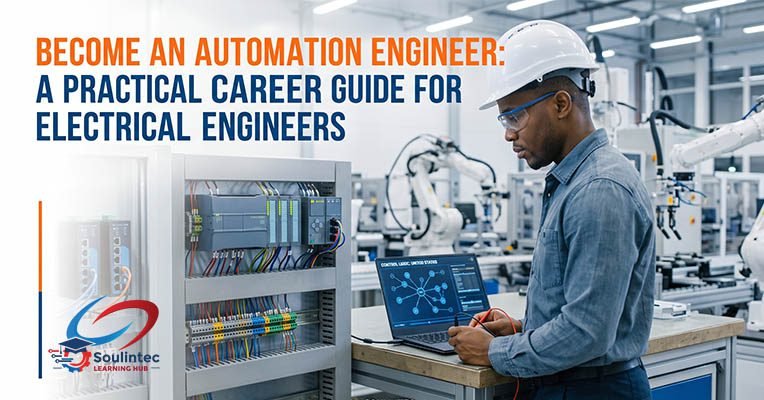
The burning question for many engineering graduates is no longer if they should enter the automation field, but how. The manufacturing sector is evolving at breakneck speed, integrating IoT, robotics, and AI-driven control systems. While a university degree provides the theoretical foundation—think control theory, PLC basics, and circuitry—it is rarely enough to land a high-value role. The gap between academic knowledge and industrial reality is vast, and it can only be bridged by hands-on training.
If you are a fresh graduate aiming to break into this lucrative field, you must move beyond the textbook and get your hands dirty.
The Theory vs. Reality Gap
In university, you learn the math behind a PID loop. In industry, you need to know why a conveyor belt is jittering because the scan cycle of a PLC is misconfigured. Employers are not hiring you to pass an exam; they are hiring you to keep production lines moving. This is why practical, project-based training is the most critical investment you can make in your early career.
Why Hands-on Training is Non-Negotiable
Automation is a discipline of doing. You cannot learn to troubleshoot a servo drive by reading a datasheet; you must see the fault light blink in real-time. Enrolling in specialized automation training courses—often offered by hardware vendors or dedicated technical institutes—gives you access to the actual hardware used in the field.
Look for courses that emphasize:
- Physical PLC Workbenches: Not just simulation software. You need to physically wire inputs and outputs (I/O), connect sensors, and deal with wiring faults.
- Industrial Communication Protocols: Training on how to make a Siemens PLC talk to a Rockwell HMI via Profinet or EtherNet/IP. This integration is where most real-world projects succeed or fail.
- VFDs and Motor Control: The vast majority of automation involves moving things. You must be comfortable programming Variable Frequency Drives and troubleshooting motor overloads.
- HMI/SCADA Development: Learning to build intuitive operator interfaces is an art that requires practice.
How to Choose the Right Course
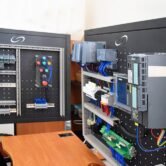
Do not fall for courses that simply offer animated videos of factories. You need to see the hardware. The best automation training courses provide a “trainer kit” or a physical lab environment. . The goal is to learn the logic of troubleshooting and system integration.
Building Your Confidence
The final benefit of structured, practical training is confidence. When you walk into an interview and can describe how you wired a 3-phase motor to a contactor and controlled it via a 24V DC signal from a PLC—rather than reciting Ohm’s Law—you change the dynamic of the interview. You stop sounding like a student and start sounding like an engineer.
What exactly should I learn to become an Automation Engineer?
The answer is not simply “learn PLC programming.”
PLC programming is important, but it is only one part of the job.
In a real factory, an automation engineer may have to read an electrical drawing in the morning, troubleshoot a motor that refuses to start, check a sensor, modify a PLC program, configure a VFD, change an HMI screen, and investigate why a PLC has suddenly stopped communicating with another device.
That is very different from sitting in front of a computer and writing Ladder Logic.
This is the part that many engineering graduates discover after graduation: university gives you the engineering foundation, but becoming comfortable with industrial automation requires practical experience.
So, if you are starting from zero, what should you actually learn?
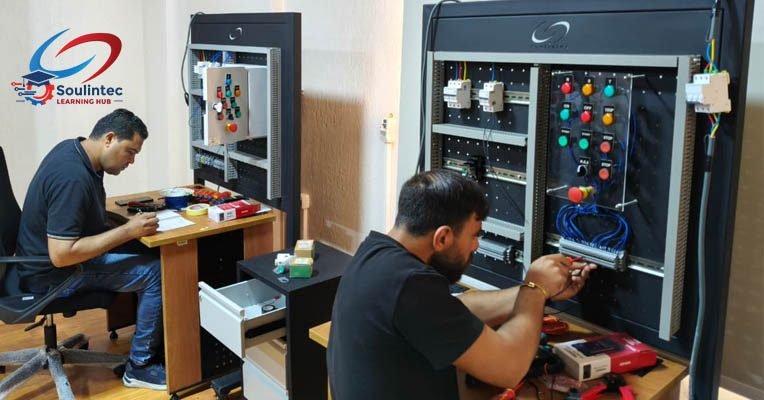
What Does an Automation Engineer Really Do?
The exact job depends on the company and industry, but automation engineers generally work on systems used to control and monitor machines and industrial processes.
That can include PLCs, Miss, SCADA systems, control panels, motors, VFDs, sensors, instrumentation, and industrial communication networks.
You may be involved in designing a control system, programming a PLC, commissioning a machine, modifying an existing program, testing a panel, or troubleshooting a problem on a running production line.
And troubleshooting is a big part of the job.
Imagine that a conveyor suddenly stops.
The operator tells you that the motor is not running.
Where do you start?
You cannot immediately assume that the motor is faulty.
Maybe the emergency stop is active.
Maybe a proximity sensor is not detecting the product.
Maybe the PLC input is not receiving the signal.
Maybe an interlock is preventing the motor from starting.
Maybe the PLC output is not turning on.
Maybe the contactor has a problem.
Maybe the overload relay has tripped.
Maybe the VFD has a fault.
Or maybe there is simply a wiring problem.
Understanding how to work through a problem like this is what makes someone useful on an industrial site.
Do You Need to Be an Electrical Engineer to Become an Automation Engineer?
Not necessarily, but an electrical engineering background gives you a very useful starting point.
Automation sits at the intersection of several disciplines. Electrical systems, control logic, programming, instrumentation, motors, drives, and communication all come together.
For an electrical engineer, the transition can therefore be quite natural.
The challenge is usually not learning what a contactor or motor is. The challenge is learning how all these components work together as part of an automated system.
This is why many graduates feel frustrated when they start looking for automation jobs.
They may understand electrical circuits.
They may have studied control systems.
They may even have written simple PLC programs at university.
But when they see a real control panel with dozens of terminals, relays, contactors, PLC modules, power supplies, sensors, and cables, they are not sure where to start.
That gap is normal.
It is also something that can be fixed with the right practical training and enough time working with real equipment.
What Should You Learn to Become an Automation Engineer?
There is no single course that turns someone into an automation engineer.
You need to build the skills gradually.
Start with electrical and control fundamentals.
If you are not comfortable reading a control circuit or understanding how a contactor, overload relay, push button, and motor work together, it is worth fixing that before jumping into advanced PLC programming.
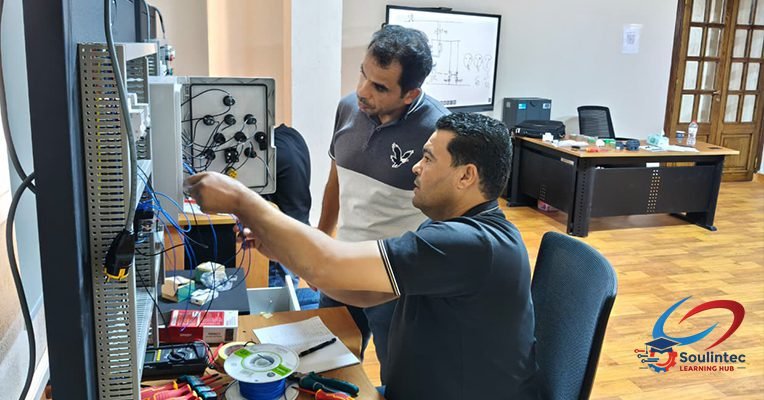
Classic Control is still extremely useful for this reason.
Understanding Start/Stop circuits, Forward/Reverse control, Star-Delta starting, interlocking, timers, contactors, relays, and overload protection gives you a much better understanding of the logic behind industrial machines.
Once you understand that logic, PLC programming becomes much easier to understand.
Learn How Industrial Wiring Works
You should also be able to read an industrial electrical drawing and understand what you are looking at inside a control panel.
You don’t necessarily need to become a professional panel builder, but you should understand how the components are connected and how signals travel through the system.
Learn to identify things such as:
Power circuits, Control circuits, PLC inputs and outputs, Terminal blocks, Sensors, Actuators, Contactors, Relays, Motor protection, 24V DC control circuits
This knowledge becomes extremely useful when you are troubleshooting a machine.
Learn PLC Programming Properly
Eventually, you will need to become comfortable with PLCs.
But don’t approach PLC programming as if it were simply another programming language.
The first question should always be:
What is the machine supposed to do?
Then you translate that sequence of operation into control logic.
You should understand digital and analog I/O, Ladder Logic, timers, counters, interlocks, alarms, program structure, PLC diagnostics, and communication.
Siemens PLCs and TIA Portal are particularly useful technologies to learn if you want to work in many industrial environments, but the bigger goal is to understand PLC concepts that can be transferred between different platforms.
A good automation engineer should be able to look at an unfamiliar PLC system and start understanding what it is doing, even if the brand is different from what they learned during training.
Don’t Stop at the PLC
This is another common mistake.
Some beginners spend months learning PLC programming and then discover that the job also requires knowledge of HMI, SCADA, drives, sensors, and communication.
An operator needs to interact with the machine, so you need to understand HMI systems.
A production manager may need to monitor the process, alarms, trends, and historical data, so you need to understand SCADA.
A PLC may need to control the speed of a motor, so you need to understand VFDs.
A PLC needs information from the field, so you need to understand sensors and instrumentation.
The more complete your understanding becomes, the easier it is to see the whole system rather than just one part of it.
Why VFDs and Motor Control Matter
Industrial automation is often about controlling physical equipment.
And in many factories, that means motors.
You may encounter conveyors, pumps, fans, compressors, mixers, and other machines driven by motors.
Knowing how a motor is started is useful.
Knowing how its speed is controlled through a VFD is even more useful.
You should understand basic VFD configuration, start and stop commands, speed references, fault conditions, and how the PLC communicates with the drive.
You don’t need to become a VFD specialist on your first day, but you should be comfortable enough to understand what is happening when a drive refuses to run.
Instrumentation Is Part of the Picture Too
Automation doesn’t happen without information from the field.
A PLC needs to know what is happening in the process.
Is the tank full?
Is the temperature too high?
Is the pressure within the required range?
Is a product actually in position?
That information comes from sensors and instruments.
Depending on the industry, you may work with proximity sensors, photoelectric sensors, pressure transmitters, temperature sensors, level instruments, flow meters, control valves, and 4–20 mA signals.
You don’t need to learn every instrument at once.
Start by understanding how sensors work, what signals they produce, and how those signals reach the PLC.
Why Troubleshooting Is More Important Than Memorizing
This is probably one of the biggest differences between studying automation and actually working in automation.
When you are studying, you normally know that the system is supposed to work.
In a factory, something is usually wrong.
You have to find out why.
A sensor isn’t responding.
A motor won’t start.
An HMI isn’t showing the correct value.
A PLC output is not activating.
A VFD has gone into fault.
Two devices are not communicating.
The ability to approach these problems logically is extremely valuable.
Experienced engineers don’t necessarily know the answer immediately.
They know how to investigate.
They check the obvious things first. They follow the signal. They eliminate possibilities. They use PLC diagnostics, electrical drawings, meters, software diagnostics, and the information available from the equipment.
That is a skill you develop through practice.
Can You Become an Automation Engineer Without Experience?
Getting the first job is often the hardest part.
Many fresh graduates face the same problem: companies want experience, but you cannot get experience without someone giving you an opportunity.
This is where practical projects and hands-on training can make a real difference.
Instead of putting “PLC” on your CV and hoping the interviewer believes you know it, imagine being able to explain a project you actually built.
You can talk about the control circuit.
You can explain the PLC inputs and outputs.
You can show how the motor was controlled.
You can explain the HMI.
You can describe a fault that happened and how you found it.
That is a much stronger conversation in a technical interview.
What Should a Fresh Electrical Engineering Graduate Learn First?
If you have just graduated and want to move into industrial automation, don’t try to learn everything simultaneously.
Build your foundation in a sensible order.
Start with electrical and Classic Control fundamentals.
Then learn industrial wiring and control panels.
Move into PLC programming.
After that, add HMI and SCADA.
Then develop your knowledge of VFDs, instrumentation, and industrial communication.
Finally, spend as much time as possible troubleshooting and building complete projects.
The exact order can change depending on your background, but the important thing is that each skill should build on the previous one.
How Long Does It Take to Become an Automation Engineer?
There is no honest answer such as “three months” or “six months.”
You can learn the fundamentals of PLC programming relatively quickly.
Becoming a competent automation engineer is different.
You need exposure to different machines, different control problems, different PLC programs, different electrical systems, and real troubleshooting situations.
Your learning speed will also depend on your starting point.
Someone who already understands electrical control and motors will have a very different learning curve from someone starting with no industrial experience.
The important thing is not to focus only on how quickly you can finish a course.
Focus on what you can actually do after finishing it.
Can you read the drawing?
Can you understand the sequence of operation?
Can you wire the I/O?
Can you write the PLC logic?
Can you diagnose a fault?
Can you explain your solution to another engineer?
Those are much better measures of progress.
What Makes a Good Automation Engineer?
You don’t need to know everything.
In fact, nobody does.
What matters is having a strong foundation and knowing how to approach problems.
A good automation engineer can move between the electrical drawing, the control panel, the PLC software, the HMI, and the machine itself without treating them as completely separate worlds.
They understand that a PLC problem can sometimes actually be a wiring problem.
A VFD problem can sometimes be caused by the control logic.
A sensor problem can sometimes be caused by incorrect PLC configuration.
And an HMI problem can sometimes be caused by communication rather than the HMI itself.
That way of thinking develops with experience.
The Career Path from Electrical Engineer to Automation Engineer
There is no single route into automation, but a practical path for many electrical engineering graduates looks something like this:
Electrical Engineering Fundamentals
Classic Control and Motor Control
Industrial Electrical Wiring
Control Panel Design and Assembly

PLC Programming
HMI
SCADA
VFDs and Motor Automation
Instrumentation
Industrial Communication
Troubleshooting
Practical Industrial Projects
The important part is not simply completing each topic.
It is being able to connect them.
For example, don’t just learn PLC programming as an isolated subject.
Build a project where a PLC reads a sensor, controls a motor through a VFD, displays the process on an HMI, and sends information to a SCADA system.
That is much closer to the way automation systems actually work.
Your Degree Is the Starting Point, Not the Finish Line
One of the most useful things you can do after graduation is to stop thinking of your degree as the complete preparation for your career.
Your degree gives you the engineering foundation.
Now you need to turn that foundation into practical ability.
You don’t need to know every PLC brand.
You don’t need to master every SCADA platform.
You don’t need to become an expert in every industrial protocol before getting your first job.
Start with the fundamentals.
Work with real equipment.
Build projects.
Make mistakes.
Troubleshoot them.
Ask questions.
Then gradually expand your knowledge.
That is how most engineers become genuinely good at automation.
Start Your Automation Career with Soulintec Learning Hub
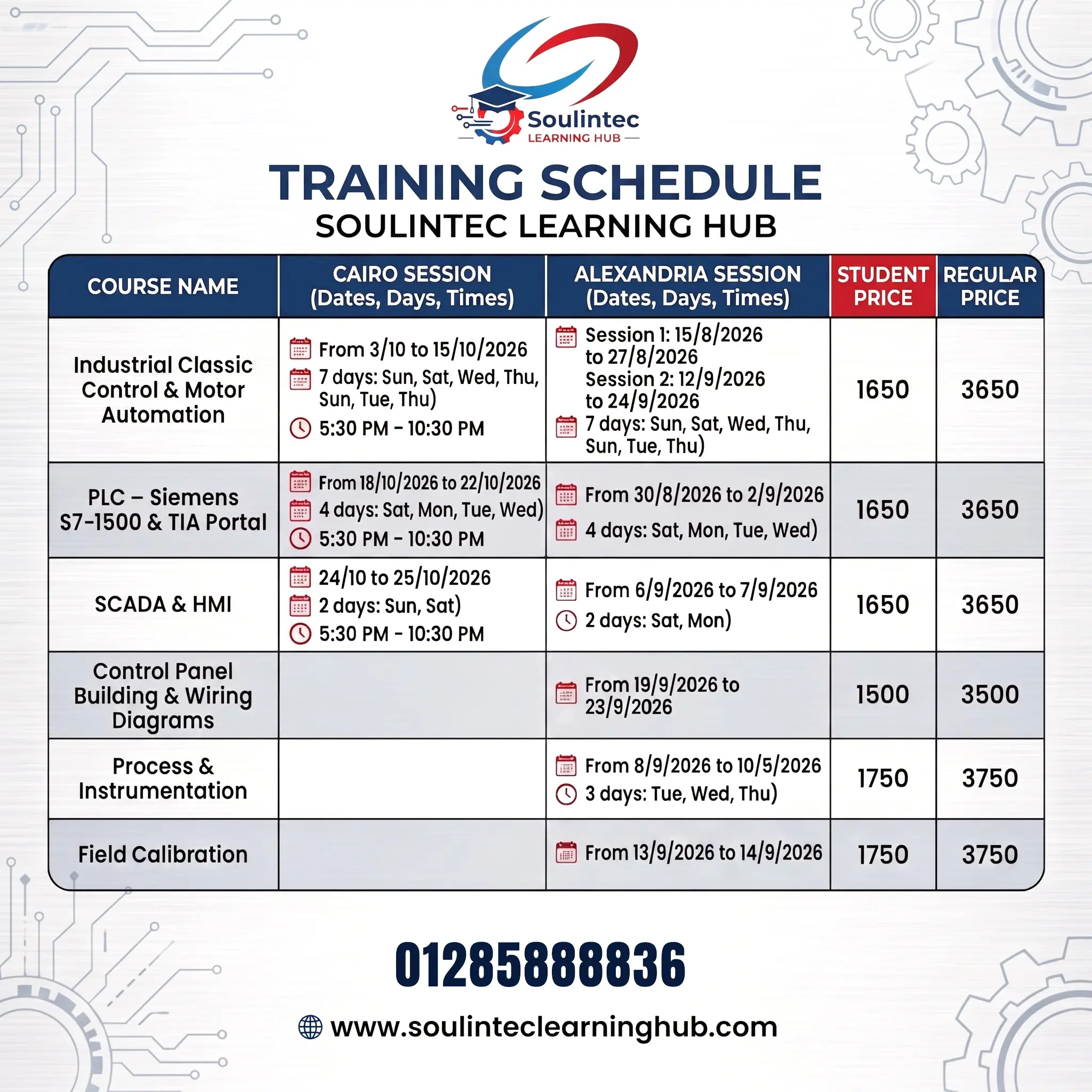
If you are an engineering student, fresh graduate, or working engineer and want to build practical industrial automation skills, Soulintec Learning Hub offers hands-on training designed to connect engineering theory with real industrial applications.
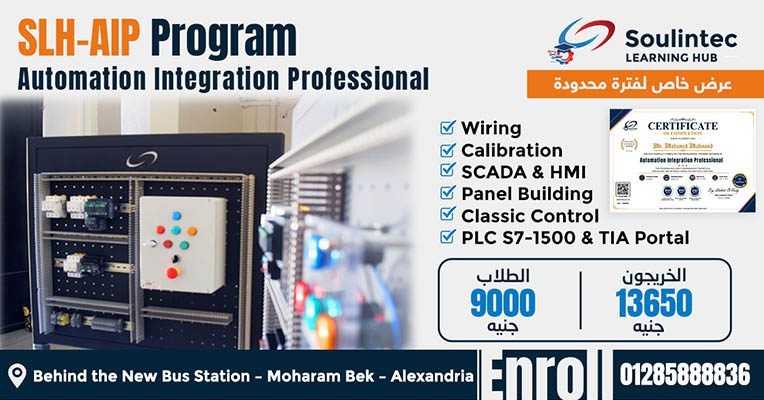
Training areas include PLC, Classic Control, Industrial Wiring, Control Panel Building, HMI and SCADA Systems, and Industrial Instrument Calibration.
The focus is practical learning rather than simply watching videos or memorizing theory.
If your goal is to become an Automation Engineer, start by building the skills you will actually use in the field.
Explore the available courses and training programs at:
Don’t wait until your first job to start learning how industrial automation works.
Start building the practical skills now, so when the opportunity comes, you are ready for it.