


Industrial Wiring Training
From Electrical Drawings to Real Panel Wiring
To the ambitious students currently navigating the corridors of the Faculty of Engineering and to the fresh graduates stepping into the vast industrial landscape: Welcome. You have spent years mastering circuit theory, power systems, and electromagnetic. But as you transition from the lecture hall to the factory floor, you will encounter a critical question: Can you turn a schematic on a piece of paper into a functioning, safe, and reliable power cabinet?
This is the gap between theoretical knowledge and industrial competency. It is a gap that cannot be closed by reading textbooks alone, it requires Hands-on Training.

The Reality Check: Theory vs. The Workshop
In university, an electrical drawing is often a logic puzzle. You analyze it to find the current flow or calculate the voltage drop. In industry, that drawing is a construction blueprint. It dictates the physical reality of copper, insulation, and protective devices.
Suddenly, terms like “wire duct fill capacity,” “ferrule crimping standards,” and “cable bending radius” become your daily vocabulary. A schematic might show a simple line connecting a contactor to a relay, but in the real world, that “line” requires routing through a specific duct, cutting to a precise length, stripping without nicking the copper, crimping the correct ferrule, and torquing the screw to manufacturer specs.
For fresh graduates, this can be daunting. For senior students, it is the reality you are about to enter. The industry expects you to understand the “language of the wires,” not just the “language of the math.”
From Schematic to Success: Bridging the Visualization Gap
The most common struggle for new engineers is visualizing the physical layout based on a ladder diagram. Industrial wiring training solves this by teaching a systematic approach:
- Interpreting the Drawing: Understanding not just what the component is, but where it goes. This includes reading bill of materials (BOM), terminal block layouts, and panel layout drawings.
- Component Identification: Physically handling circuit breakers, contactors, overload relays, PLCs, and terminal blocks. Recognizing their physical constraints and wiring ports.
- Wire Management: Learning that a professional panel is a work of art. Wires must be loomed, labeled, and terminated with precision to ensure both functionality and maintainability.
The Soulintec Difference: Learning by Doing
At Soulintec Learning Hub, we believe that watching a video is not training. Listening to a lecture is not training. Wiring is training.

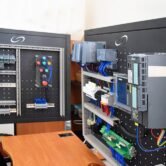
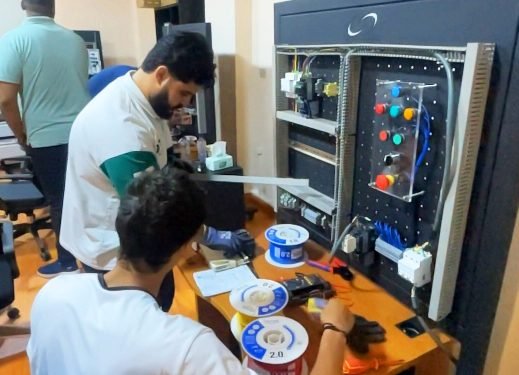
Our specialized courses are designed specifically for engineering students and recent graduates who need to convert their academic knowledge into tangible skills. We move beyond the slideshow. Our participants stand at real workbenches, facing real components. They use professional crimping tools, wire strippers, and screwdrivers.
Our instructors—industry veterans—don’t just tell you how to wire a star-delta starter; they sit beside you as you do it. They teach you the tricks of the trade: how to avoid loose connections that cause fires, how to color-code your wiring for easy troubleshooting, and how to produce a panel that passes a professional inspection.
Your Next Step
Whether you are a final-year student looking to stand out in your internship interviews, or a fresh graduate aiming to secure a role in automation, maintenance, or design, the value of practical wiring cannot be overstated.
Do not let your first time holding a crimping tool be your first day on the job. The transition from “Electrical Drawings” to “Real Panel Wiring” is the defining moment of your early career.
Come to Soulintec. Let’s wire your future together.
Learn. Practice. Build. Troubleshoot.
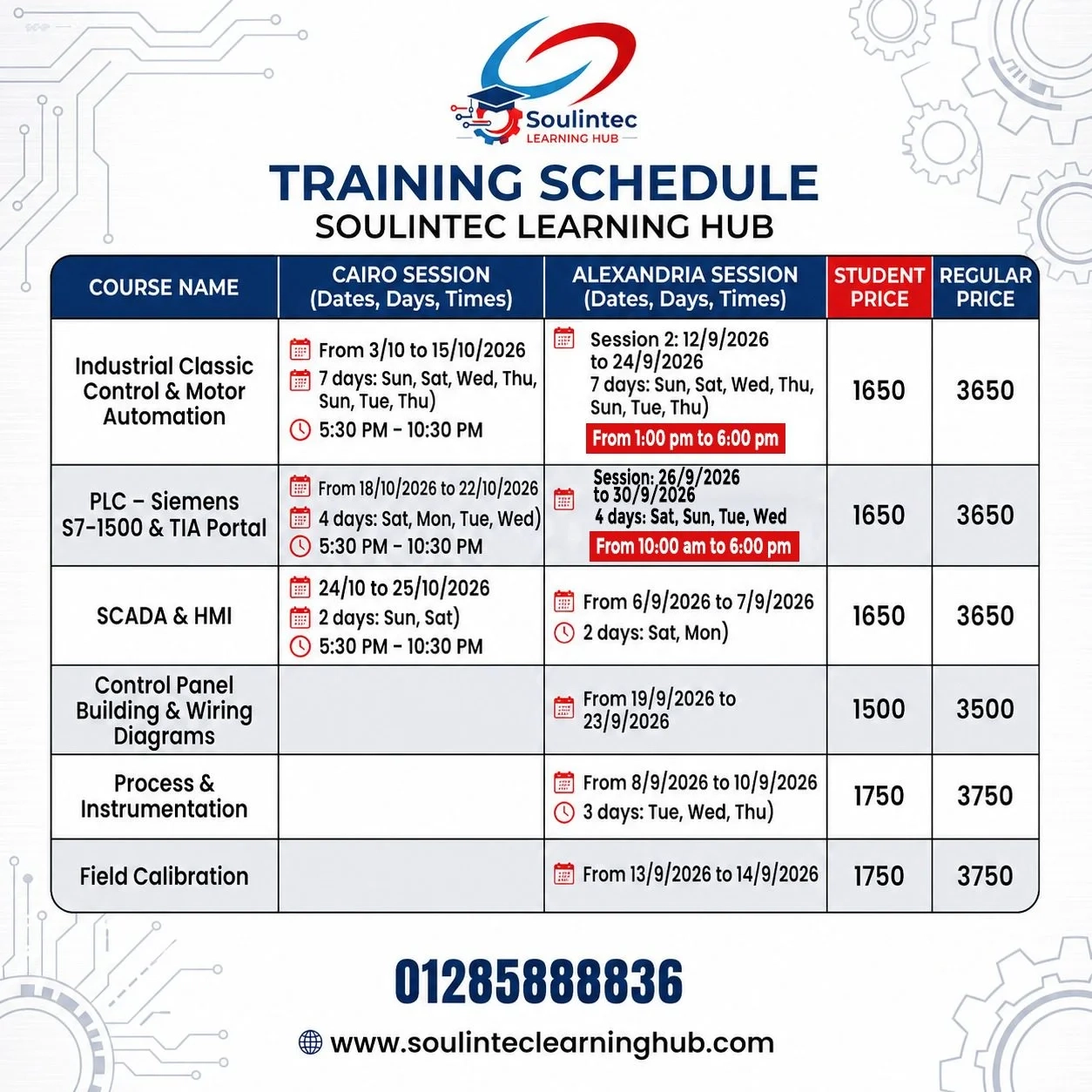
Explore the available courses and training programs at:
Don’t wait until your first job to start learning how industrial automation works.
Start building the practical skills now, so when the opportunity comes, you are ready for it.