


The Truth About Becoming an Automation Engineer

What Does an Automation Engineer Actually Do? A Practical Guide
Industrial automation is one of the most important areas in modern manufacturing, production, oil and gas, water treatment, energy, and process industries.
But what does an Automation Engineer actually do?
Is the job only about programming PLCs? Does an Automation Engineer need to understand electrical systems? What about SCADA, instrumentation, control panels, VFDs, and industrial communication?
The reality is that industrial automation is a multidisciplinary field. An Automation Engineer needs to understand how electrical systems, control systems, instrumentation, software, and industrial equipment work together.
This guide explains what Automation Engineers actually do in real industrial environments and provides a practical learning roadmap for electrical, mechatronics, and engineering graduates who want to build a career in automation.
What Is an Automation Engineer?
An Automation Engineer is responsible for designing, programming, integrating, commissioning, maintaining, and troubleshooting automated industrial systems.
In a typical industrial environment, an Automation Engineer may work with:
- PLCs
- HMI systems
- SCADA systems
- Sensors and transmitters
- Motors and motor control systems
- Variable Frequency Drives (VFDs)
- Control panels
- Industrial networks
- Process instrumentation
- Industrial machines
- Electrical control systems
The engineer’s role is to make industrial processes operate safely, reliably, and efficiently with minimum unnecessary manual intervention.
What Does an Automation Engineer Do in a Real Industrial Environment?
The daily responsibilities of an Automation Engineer can vary depending on the industry and project.
However, several activities are common across industrial automation jobs.
PLC Programming
PLC programming is one of the core skills in industrial automation.
An Automation Engineer may program a PLC to control motors, pumps, valves, conveyors, production machines, and complete industrial processes.
Common PLC tasks include:
- Creating control logic
- Programming digital and analog inputs and outputs
- Developing sequences
- Monitoring PLC status
- Testing I/O signals
- Troubleshooting logic problems
- Modifying existing programs
- Commissioning PLC systems
Siemens PLCs and TIA Portal are widely used technologies that automation engineers may encounter in industrial environments.
For engineers starting their automation journey, understanding PLC fundamentals is one of the most important steps.
Motor Control and Classic Control
Automation does not start with PLC programming.
A strong Automation Engineer should understand the electrical control systems that existed before modern PLC-based automation.
Classic control concepts include:
- Contactors
- Relays
- Overload protection
- Timers
- Push buttons
- Emergency stop circuits
- Star-delta starting
- Direct-on-line starting
- Interlocking
- Motor protection
Understanding these systems makes PLC programming easier because many PLC control sequences are based on the same fundamental industrial control concepts.
HMI and SCADA
Automation Engineers also work with operator interfaces and supervisory systems.
An HMI allows operators to interact with machines and processes through graphical interfaces.
SCADA systems provide a higher-level view of industrial processes, allowing operators and engineers to monitor equipment, alarms, process values, trends, and system status.
A typical automation system may therefore include:
PLC → HMI → SCADA → Industrial Network → Field Devices
Understanding how these systems communicate is an important part of modern automation engineering.
Learn more about SCADA in our practical guide:
SCADA: Supervisory Control and Data Acquisition – What, Why & How?
Industrial Wiring and Control Panels
An Automation Engineer should not be limited to software.
Industrial automation systems depend on correctly designed and wired electrical panels.
Engineers may need to understand:

- Control panel components
- Terminal blocks
- Circuit breakers
- Contactors
- Relays
- PLC modules
- Power supplies
- Industrial switches
- Control wiring
- Signal wiring
- Cable identification
- Electrical schematics
During installation and commissioning, the engineer may also need to inspect wiring and verify that field devices are correctly connected to the control system.
Sensors and Process Instrumentation
Industrial automation depends heavily on accurate field information.
Sensors and instruments provide the PLC or control system with information about the physical process.
Examples include:
- Temperature sensors
- Pressure transmitters
- Flow meters
- Level sensors
- Proximity sensors
- Photoelectric sensors
- Position sensors
- Pressure switches
- Level switches
An Automation Engineer should understand how these devices work, how they are connected, and how their signals are interpreted by the control system.
Variable Frequency Drives
VFDs are commonly used to control the speed and operation of electric motors.
Automation Engineers may configure and troubleshoot VFDs for applications such as:
- Pumps
- Fans
- Conveyors
- Compressors
- Industrial machinery
A practical understanding of motor control, PLCs, electrical systems, and VFDs allows the engineer to build more complete automation solutions.
Troubleshooting
Troubleshooting is one of the most important practical skills for an Automation Engineer.
When a machine stops working, the engineer needs to determine whether the problem is related to:
- Electrical power
- Wiring
- Sensors
- Actuators
- PLC inputs or outputs
- PLC programming
- Communication
- HMI
- SCADA
- VFD parameters
- Mechanical equipment
This is why practical training is so important.
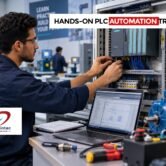
Knowing the theory of a PLC is different from standing in front of a real control panel and finding why an input is not changing or why a motor is not starting.
What Skills Does an Automation Engineer Need?
A successful Automation Engineer typically develops skills across several areas.
1. Electrical Fundamentals
Understanding electrical principles is essential.
You should be comfortable with:
- Voltage
- Current
- Power
- AC and DC circuits
- Protection devices
- Motors
- Control circuits
- Electrical diagrams
2. Classic Control
Learn how industrial control circuits work before moving deeply into PLC programming.
3. PLC Programming
Learn how to:
- Configure a PLC
- Create programs
- Work with digital and analog I/O
- Develop sequences
- Monitor logic
- Troubleshoot programs
4. HMI and SCADA
Learn how operators interact with automated systems and how industrial processes are monitored.
5. Industrial Wiring and Panel Building
Learn how automation components are physically connected and organized inside industrial control panels.
6. Instrumentation
Understand sensors, transmitters, measurement signals, and field devices.
7. Industrial Communication
Modern automation systems rely heavily on communication between PLCs, HMIs, SCADA systems, drives, sensors, and other industrial devices.
Understanding industrial Ethernet and common industrial communication concepts is increasingly important.
8. Troubleshooting
Develop the ability to diagnose problems systematically instead of simply changing components until the system works.
What Software Should an Automation Engineer Learn?
The exact software depends on the company, industry, and automation platform.
However, engineers working with Siemens automation systems may encounter:
- TIA Portal
- WinCC
- PLC programming environments
- HMI configuration tools
- Simulation and testing tools
- Industrial communication software
Software knowledge should always be combined with practical understanding of the physical automation system.
Programming a PLC without understanding the equipment it controls can create significant gaps in practical engineering skills.
Can an Electrical Engineer Become an Automation Engineer?
Yes.
Electrical engineering provides a strong foundation for industrial automation because automation systems depend heavily on electrical control, motors, protection, wiring, and industrial equipment.
An Electrical Engineer can build toward automation by developing additional skills in:

Electrical Engineering
→ Classic Control
→ PLC Programming
→ HMI
→ SCADA
→ Instrumentation
→ Industrial Networking
→ Troubleshooting
Mechatronics and control engineering graduates can follow a similar path.
Can a Fresh Graduate Become an Automation Engineer?
Fresh graduates can enter the automation field, but academic knowledge alone may not be enough for many practical industrial responsibilities.
The biggest gap for many new engineers is hands-on experience.
A graduate may understand what a PLC is but still have limited experience with:
- Connecting real I/O
- Wiring control circuits
- Testing sensors
- Troubleshooting PLC inputs and outputs
- Building control panels
- Configuring HMIs
- Commissioning equipment
- Diagnosing industrial faults
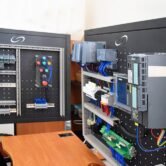
Practical laboratory training can help bridge this gap by allowing engineers to work with real industrial components and realistic control systems.
Automation Engineer Career Roadmap
A practical learning path can look like this:
Step 1: Electrical Fundamentals
Build a strong understanding of industrial electrical systems.
Step 2: Classic Control
Learn motor control circuits, contactors, relays, protection, and interlocking.
Step 3: Industrial Wiring
Learn how electrical and automation components are connected in real control panels.
Step 4: PLC Programming
Move into PLC hardware, I/O, programming, troubleshooting, and industrial control logic.
Step 5: HMI
Learn how operators interact with machines and automation systems.
Step 6: SCADA
Learn supervisory monitoring, alarms, trends, data visualization, and industrial process monitoring.
Step 7: Instrumentation
Understand sensors, transmitters, measurement signals, and field instrumentation.
Step 8: Industrial Communication
Develop an understanding of how automation devices communicate with each other.
Step 9: Troubleshooting and Commissioning
Practice diagnosing real industrial problems and commissioning complete systems.
The goal is not simply to collect certificates.
The goal is to build the ability to understand, operate, program, troubleshoot, and integrate real industrial automation systems.
Theory vs. Hands-On Training: What Actually Matters?
Automation is a practical engineering discipline.
Books and courses can explain how PLCs, sensors, motors, and control systems work. However, engineers also need opportunities to apply that knowledge.
Hands-on practice allows you to experience situations such as:
- A sensor providing an incorrect signal
- A PLC input not responding
- A motor failing to start
- A communication connection failing
- An incorrect control sequence
- A VFD parameter problem
- A wiring fault
These situations develop troubleshooting skills that are difficult to acquire through theory alone.
This is why practical industrial laboratories can play an important role in automation training.
Where Should You Start Learning Industrial Automation?
If you are an Electrical Engineer, Mechatronics Engineer, engineering student, or fresh graduate, you do not need to learn everything at once.
Start with the fundamentals and build your skills progressively.
A practical sequence is:
Classic Control
→ PLC
→ HMI & SCADA
→ Industrial Wiring & Panel Building
→ Instrumentation
→ Industrial Communication
→ Advanced Automation
→ Troubleshooting & Real Projects
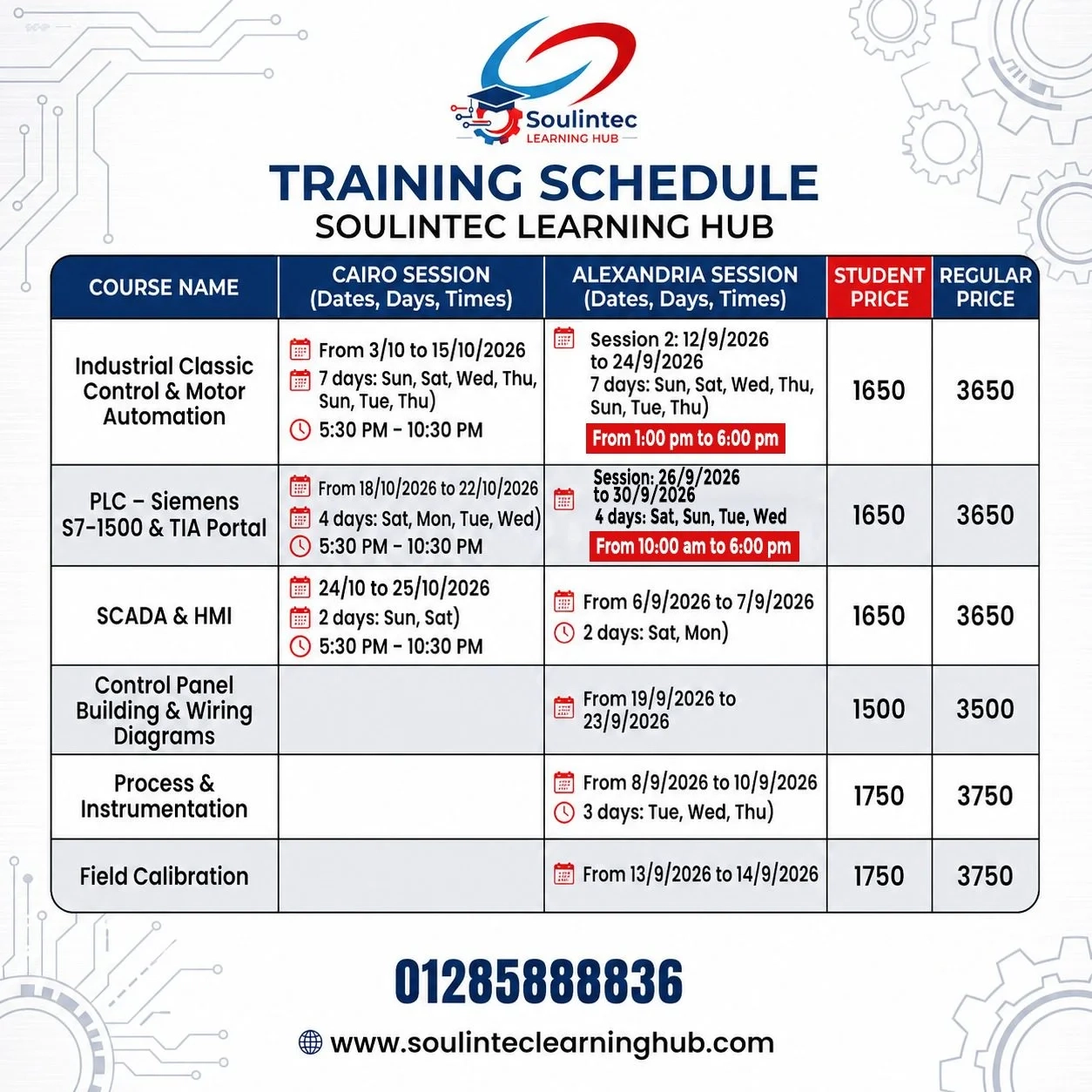
At Soulintec Learning Hub, training is designed around practical industrial skills, with hands-on work using automation, electrical, instrumentation, and control equipment.
Explore our industrial automation training programs:
PLC Training
SCADA Systems
Classic Control
Industrial Wiring
Panel Building
Instrumentation & Calibration
AI-Powered Automation & Data Analytics
Final Thoughts
An Automation Engineer is not simply a PLC programmer.
Modern automation engineering combines electrical systems, control logic, PLCs, HMIs, SCADA, instrumentation, industrial networks, control panels, motors, drives, and troubleshooting.
For engineers who want to build a career in industrial automation, the most useful approach is to develop these skills step by step and combine theoretical understanding with practical experience.
The objective is simple:
Understand the system.
Work with the equipment.
Program the control system.
Troubleshoot the problem.
Make the process work.
That is the foundation of practical industrial automation engineering.
Frequently Asked Questions
What does an Automation Engineer do?
An Automation Engineer designs, programs, integrates, commissions, maintains, and troubleshoots industrial automation systems involving PLCs, HMIs, SCADA, instrumentation, drives, control panels, and industrial networks.
What should I learn to become an Automation Engineer?
A practical learning path includes electrical fundamentals, classic control, PLC programming, HMI, SCADA, industrial wiring, instrumentation, industrial communication, and troubleshooting.
Can an Electrical Engineer become an Automation Engineer?
Yes. Electrical engineering provides a strong foundation, particularly in motors, electrical control, protection, wiring, and industrial systems. Additional training in PLCs, SCADA, instrumentation, and automation is typically required.
Is PLC enough to become an Automation Engineer?
PLC programming is an essential skill, but modern automation engineering usually involves more than PLCs. HMI, SCADA, instrumentation, drives, electrical control, networking, wiring, and troubleshooting are also important.
Should I learn PLC or SCADA first?
For most beginners, it is useful to understand electrical control fundamentals and PLCs before moving deeply into SCADA because SCADA systems commonly interact with PLC-based control systems.
Is hands-on training important for Automation Engineers?
Yes. Practical experience helps engineers understand how real equipment behaves and develop troubleshooting, wiring, commissioning, and integration skills.
Can fresh graduates work in industrial automation?
Fresh graduates can pursue automation careers, but building practical skills alongside academic knowledge can help them become more prepared for industrial environments.
How long does it take to learn industrial automation?
The time required depends on your engineering background, previous experience, learning schedule, and the depth of skills you want to develop. Automation is a broad field, so continuous learning and practical experience are important.
Where can I study industrial automation in Egypt?
Industrial automation training is available through specialized engineering training centers and industrial training laboratories in Egypt. When choosing a program, consider the practical equipment, curriculum, instructor experience, and amount of hands-on training provided.
Explore the available courses and training programs at:
Don’t wait until your first job to start learning how industrial automation works.
Start building the practical skills now, so when the opportunity comes, you are ready for it.