


PLC Training Alexandria
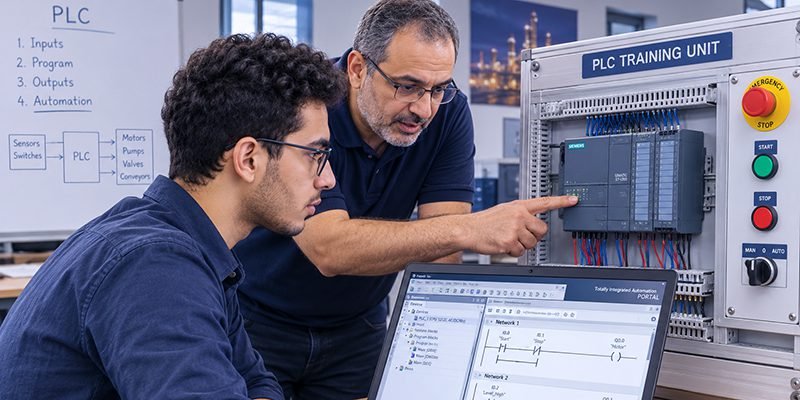
Beyond the Laptop: Why Hands-On PLC Training is Non-Negotiable for Modern Engineers
As a fresh graduate in electrical engineering, you have likely spent the last four or five years mastering the theoretical pillars of our profession. You can solve complex circuit theories, you understand the principles of electromagnetism, and you can probably recite Ohm’s Law in your sleep. However, as you step into the industrial world of automation, you will quickly discover a gap between what is taught in the lecture hall and what happens on the factory floor.
This gap is most visible in the world of Programmable Logic Controllers (PLCs).
A PLC is the brain of modern industry. It controls everything from the bottling plant producing your drinking water to the conveyor belts at international airports. If you are pursuing a career in automation, controls, or maintenance, the ability to program and troubleshoot a PLC is your most valuable currency. But reading about PLCs and actually working with one are two entirely different experiences.
Here is why prioritizing hands-on PLC training is the most important career decision you can make right now.
From Theory to Reality: The Disconnect
In university, you learn about logic gates, ladder logic diagrams, and perhaps you even simulate a process on a computer screen. This is an excellent foundation. However, a software simulation rarely prepares you for the reality of a hardware panel.
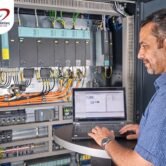
In the real world, wires come loose. Sensors fail. Power supplies dip. When you are standing in front of a physical PLC rack with a multimeter in hand and a machine that is down, the stakes are high. Simulation software often assumes a perfect world where inputs and outputs always function as intended. Hands-on training smashes that illusion. It forces you to deal with noise, faulty wiring, and the physical reality of how current flows.
The Muscle Memory of Troubleshooting
The most critical skill an automation engineer possesses is not writing a program from scratch; it is troubleshooting an existing one. When a production line stops, the company is losing money every single second. They do not need someone who can eventually figure out the problem from a textbook. They need someone with the muscle memory to identify a fault immediately.
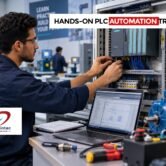
Hands-on training builds this instinct. When you physically wire a proximity sensor to an input card and see the LED light up on the module, you create a neural link between the code on the screen and the physical action. When you force an output in the software and hear the physical “click” of a contactor, you finally understand what the code actually does.
This physical interaction teaches you the number one rule of industrial maintenance: check the physical world first. Is the breaker on? Is the wire landed on the correct terminal? Is the sensor actually detecting the part? You only learn to ask these questions efficiently when you have spent hours in front of a training rig that mimics a real machine.
Safety First: Building Good Habits
A PLC often controls machinery that can crush, cut, or burn. A programming error made on a laptop is just a syntax error. The same error made on a live machine can be a safety incident.
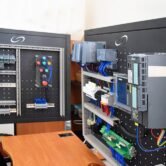
Hands-on training with real hardware, specifically training rigs designed for education, provides a sandbox. In this sandbox, you can make mistakes safely. You can short a wire (within reason), write a bad line of logic, or misconfigure a communication protocol without the fear of damaging a million-dollar production line or injuring yourself.
This environment teaches you the discipline of safety. You learn how to properly lock out a panel, how to verify zero energy, and how to respect the power of the equipment you are controlling. These habits are not just professional requirements; they are essential for keeping you and your colleagues alive.
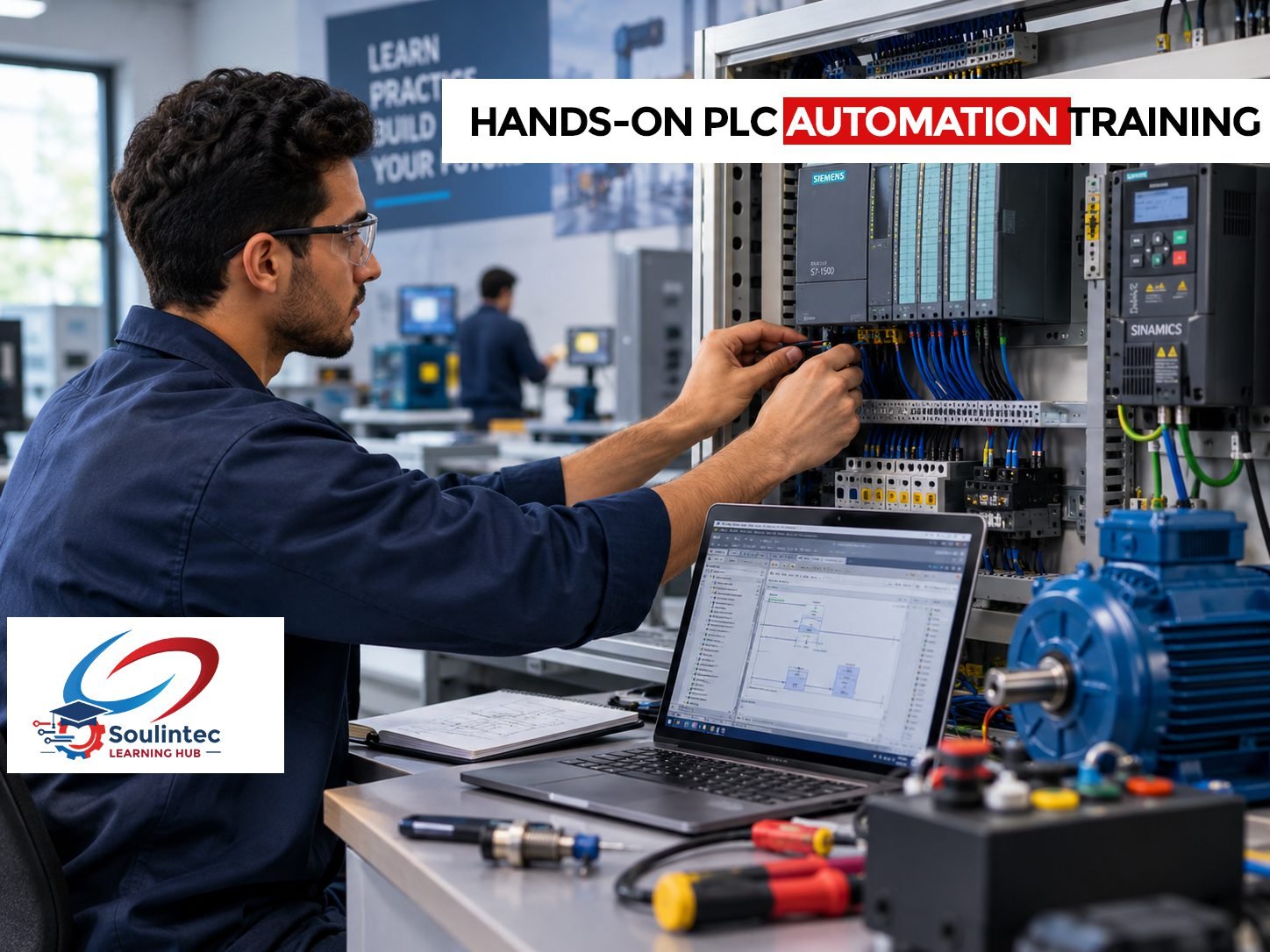
Understanding the Ecosystem (It is Not Just Code)
A PLC is never an island. It lives in an ecosystem of Variable Frequency Drives (VFDs), Human Machine Interfaces (HMIs), industrial networking protocols, and distributed I/O.
When you learn only through software, you often ignore the wiring. In a hands-on lab, you must connect the PLC to the drive using the correct cabling. You must set the IP address on the HMI to talk to the processor. You must understand the difference between sinking and sourcing inputs because if you wire it wrong, the light will not turn on.
This integration is where the magic of automation happens. A hiring manager knows that a graduate who has physically wired a PLC to a VFD and made a motor spin via code is worth ten graduates who have only watched a YouTube tutorial on PID loops.
Confidence in the Interview and on the Floor
Let us be pragmatic about your career. The interview process for automation roles is often technical. Sometimes, it is even practical. You may be asked to describe how to wire a start-stop circuit or how to interpret a rung of ladder logic.
When you have hands-on experience, you answer these questions with confidence. You are not recalling a diagram you memorized; you are recalling a memory of actually doing it. This confidence is palpable to employers. It tells them that you will not be a liability on day one and that you can be trusted to touch expensive equipment.
The Soulintec Learning Hub Advantage
The industrial world is moving fast. Automation is consuming every sector, and the demand for skilled PLC programmers and troubleshooters is higher than ever. But to be truly “skilled,” you must move beyond simulation.
You need to put your hands on the hardware. You need to see the sparks, hear the clicks, and smell the distinct scent of a control panel warming up. You need to troubleshoot a wire that is in the wrong terminal.
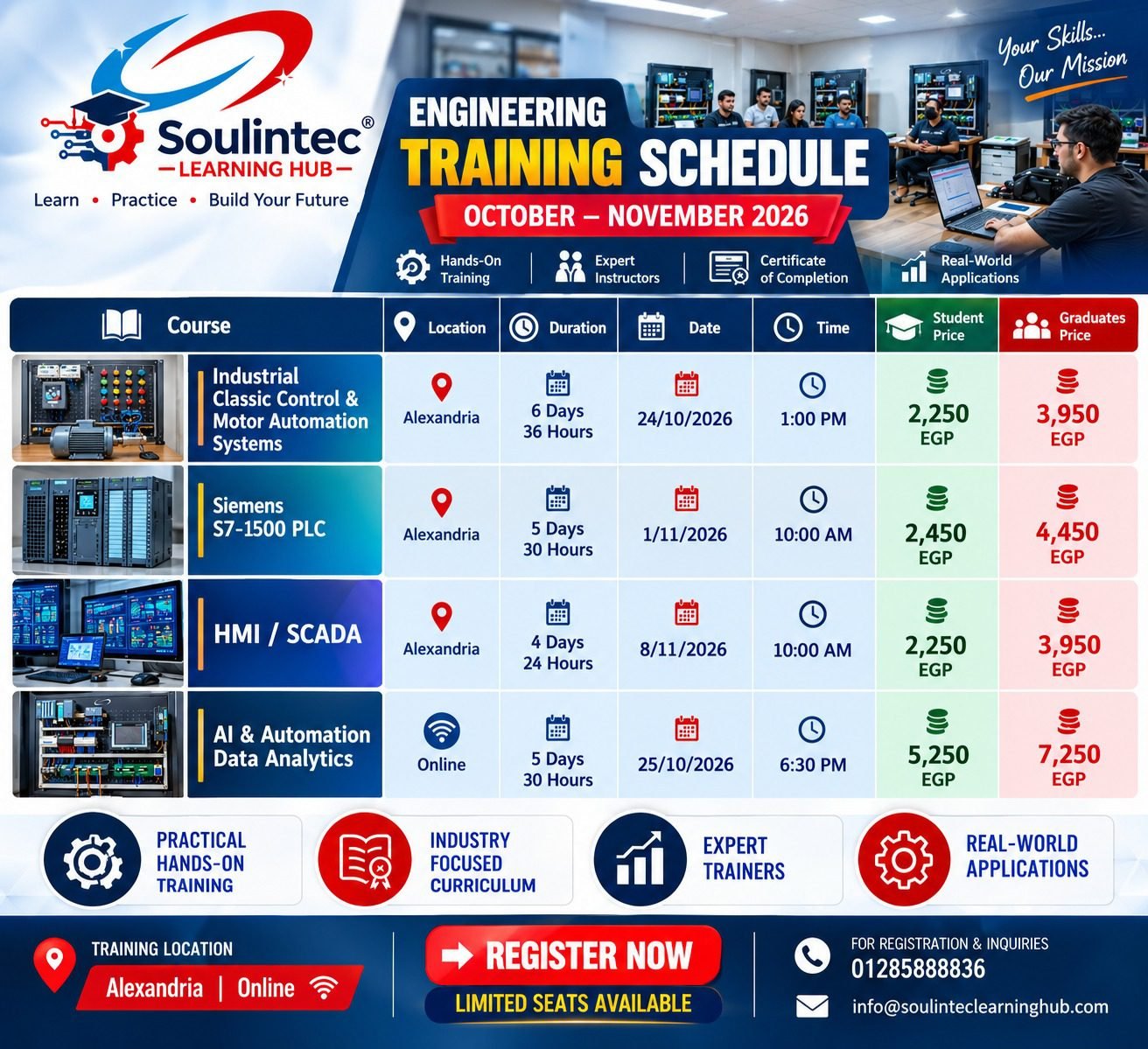
At Soulintec Learning Hub, we understand this necessity. Our training philosophy is built on the principle of “learning by doing.” We do not just teach you what a timer is; we hand you the wires and the PLC and ask you to build the circuit.
Do not let your education stop at theory. Take the next step in your engineering journey. Visit our course page today to explore our comprehensive PLC training program. It is time to move from the classroom to the control room.